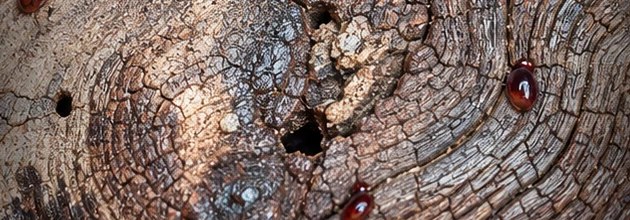
Material Study
Every piece of wood records the conditions it grew in: drought years tighten the rings, wounds are sealed with resin, water and sand polish what remains.
This study gathers close-up observations from the collection — grain, texture, resin, the marks of time, and the natural forms that emerge when a tree's history is left visible.
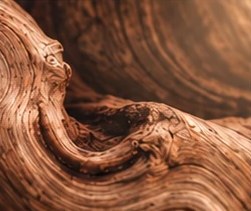
Grain
Grain is the record of how a tree grew. Wide rings mark generous years; tight ones, drought and cold. Where a branch once joined the trunk, the grain swirls around the knot it left behind.

Texture
Texture is what the hand finds: ridges raised by wind and sand, softness where water has polished the surface for decades, the fine cracks of slow drying.
Resin
When a tree is wounded it seals the injury with resin. Over years the resin hardens into amber-coloured beads and veins that catch the light.
Time
Some of these pieces lay in rivers and soil for decades before they were found. Time bleaches the surface, removes the soft sapwood and leaves only the hardest heart.
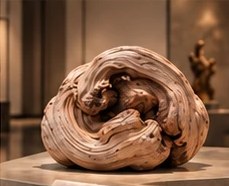
Natural Form
Nothing in the collection was shaped by a carver's design. The forms come from how the tree grew, broke, and weathered — a flame, a wave, a knot at rest.